Field Notes
Things We've Seen & What Not To Do
Over the years working on networks across the Santa Ynez Valley, we’ve seen things. Some of these situations were created by well-meaning people who were just guessing. Some were acts of nature. One involved a bat. Another time we saw a goat tied to a boat on the side of the road.
This page exists partly as a cautionary reference and partly because some of these photos are too good not to share.
Creative Interpretation
Two Connections, One Cable
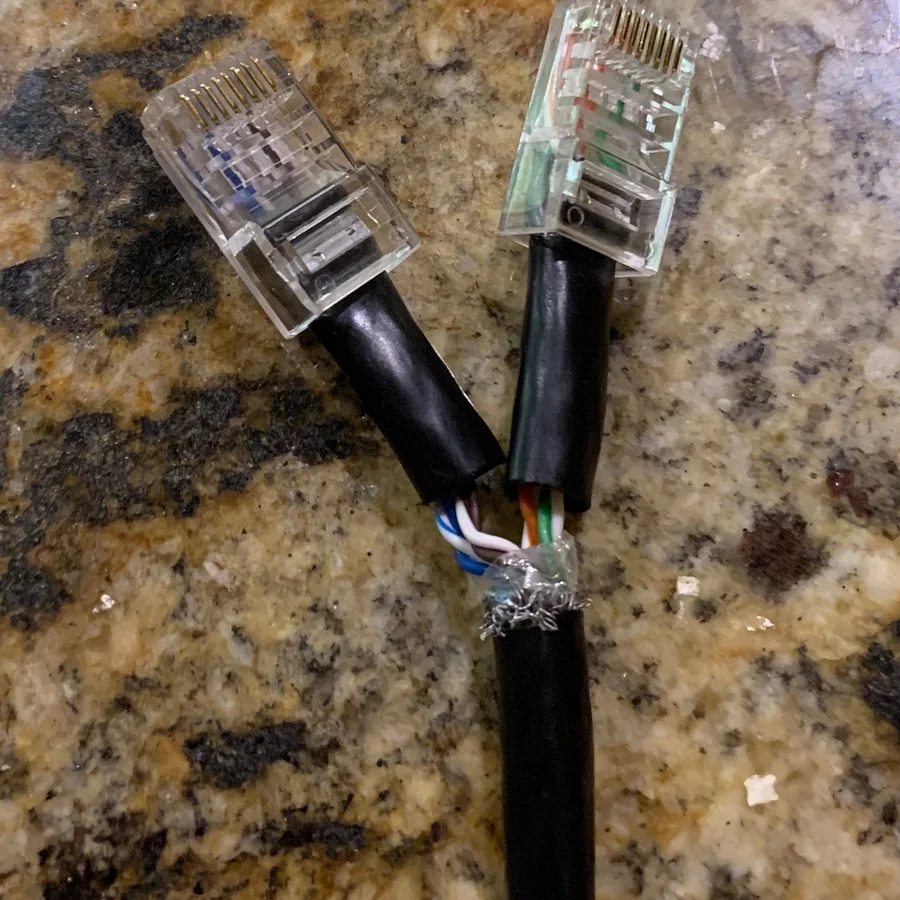
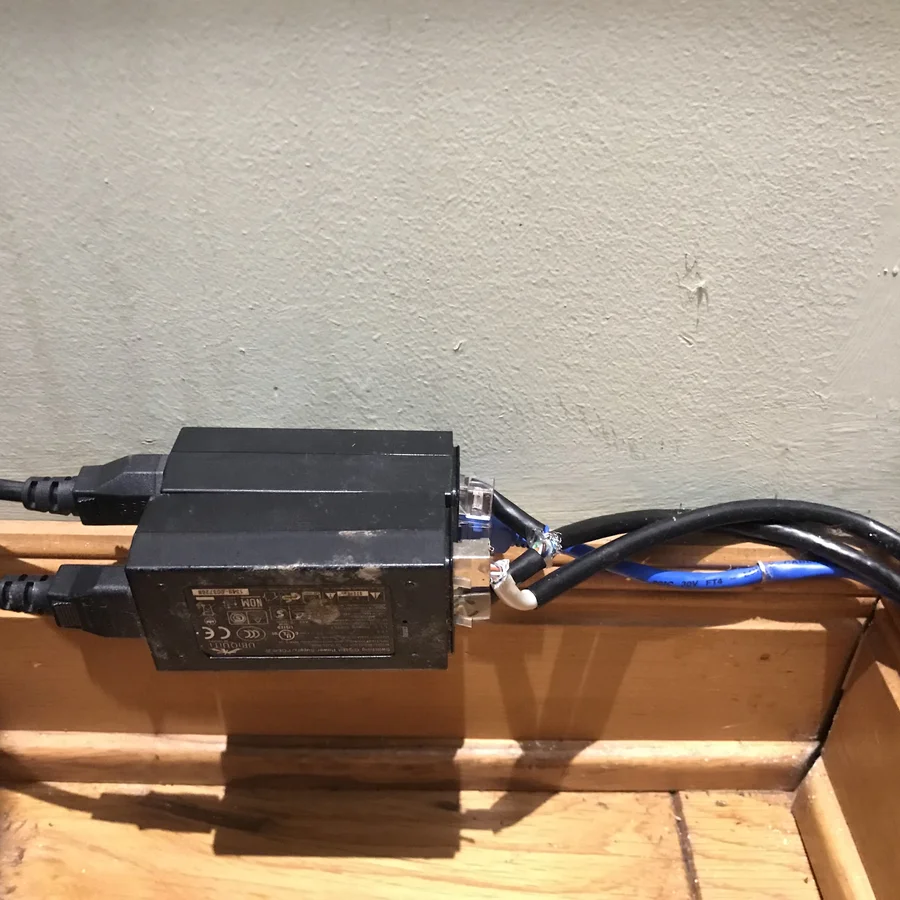
Ethernet cable contains multiple wire pairs that need to remain intact from one end to the other. Someone cut this cable in the middle and twisted the exposed wires together, splitting them between two separate connectors, apparently hoping to produce two working connections from one. It produced zero.
The correct solution is a network switch, which costs more than wire nuts but considerably less than revisiting this approach twice.
Wrong Part, Outdoors
Weatherproof. Allegedly.
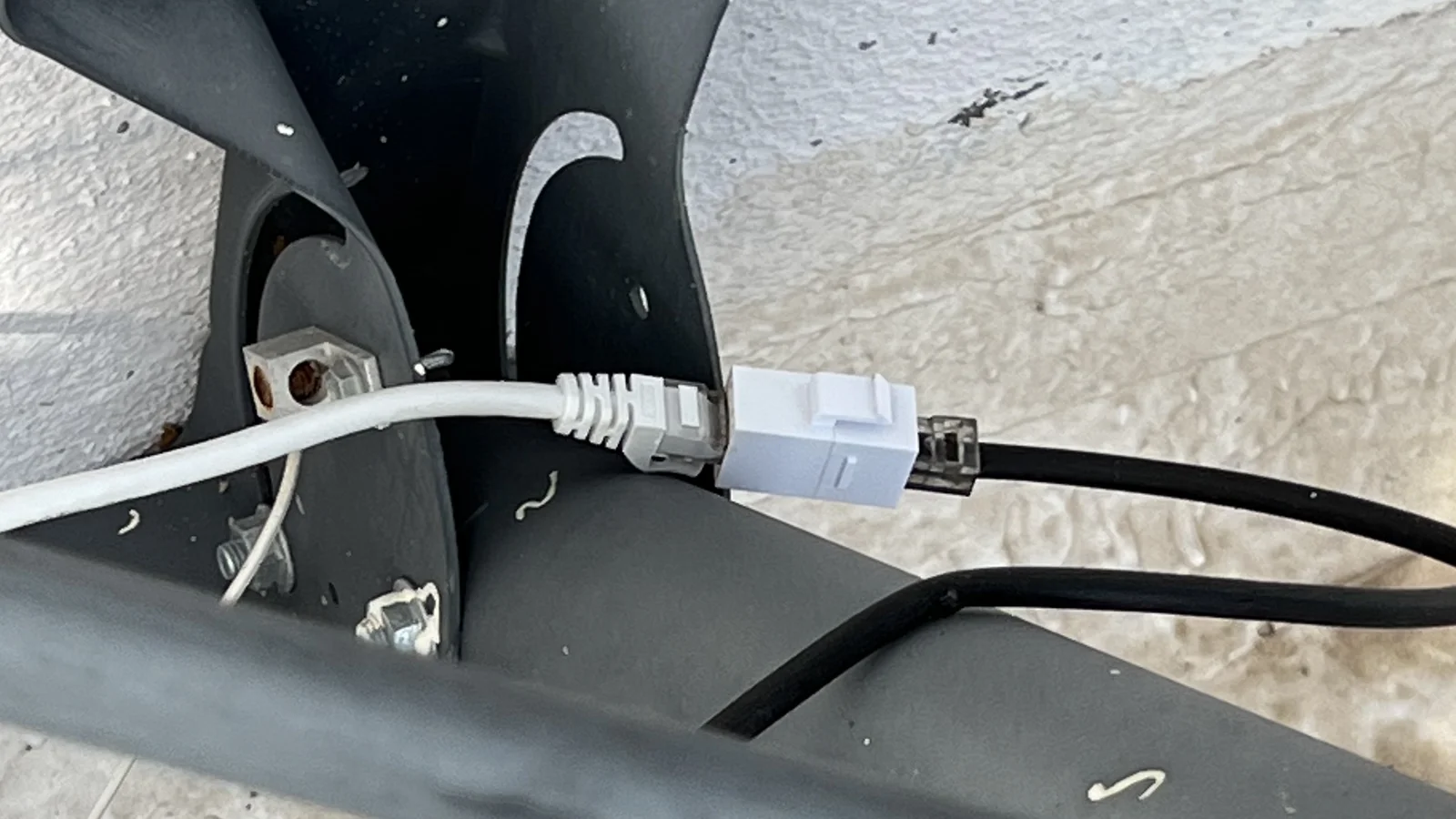
The white component in the center of this photo is an indoor Ethernet keystone coupler. It is rated for interior use, in controlled environments, away from moisture. It is installed outdoors on a metal antenna mount, exposed to morning dew, irrigation overspray, and the occasional Santa Ynez fog, with an indoor patch cable as well.
The unshielded gold contacts inside corrode and short on contact with water. This particular one already had. A quality outdoor-rated coupler with rubber seals costs about $15. A service call to diagnose intermittent connectivity costs somewhat more.
User Error
I Definitely Didn’t Touch Anything
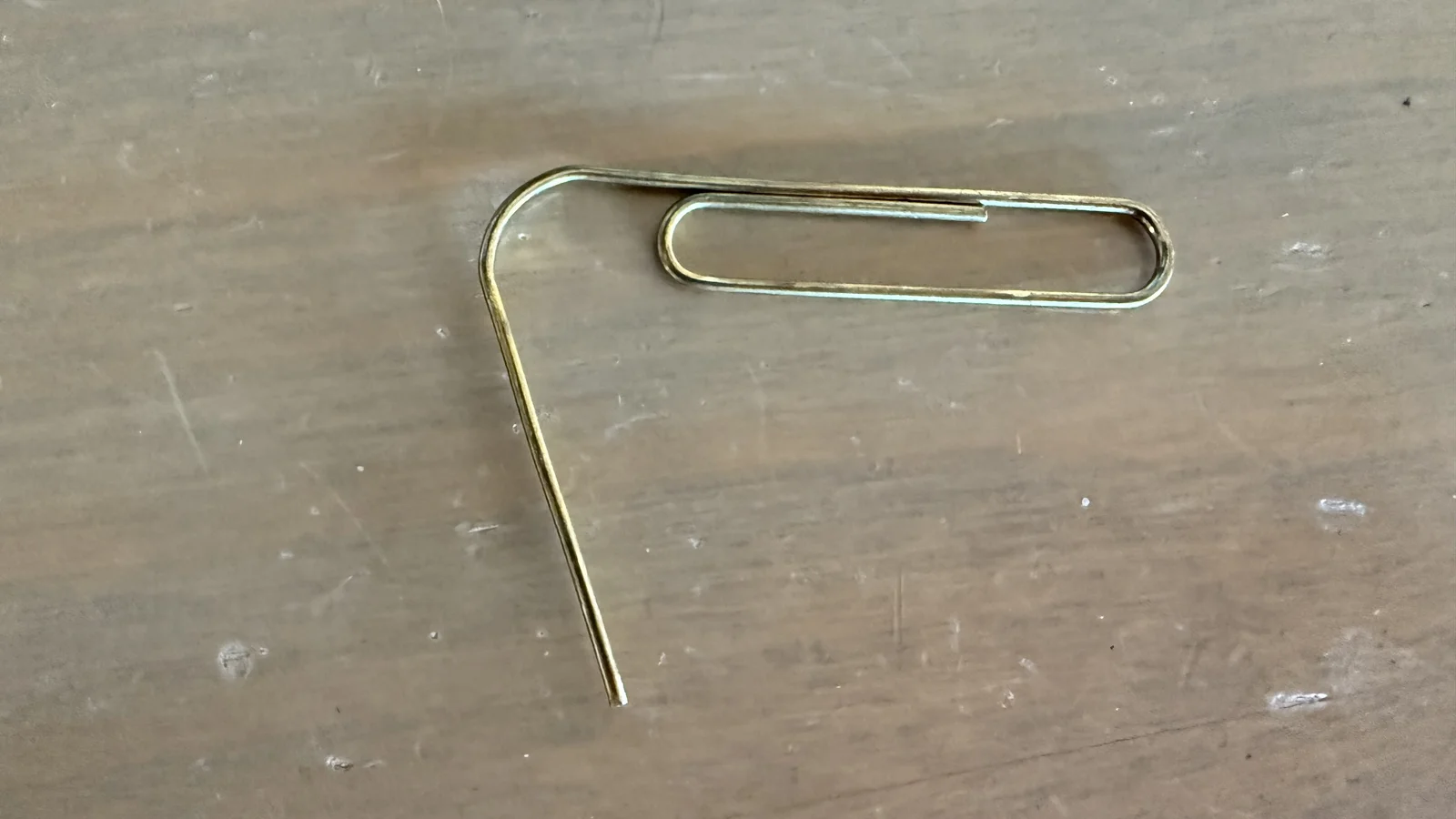
The call came in: Wi-Fi was down. The customer was certain they hadn’t touched anything. They mentioned this several times.
Our technician arrived to find a paperclip beside the router. The router had been fully reset to factory defaults.
We don’t know how it got there. The customer doesn’t know how it got there. The Wi-Fi came back up. Nobody pressed the issue.
Some of our routers can be re-provisioned remotely to save a truck roll. If you use a paperclip or otherwise make a mistake, please tell us to help get it fixed faster.
Manufacturing Defect
This Is Not a Feature
Not all failures are subtle. This large wireless radio failed due to a defect in the enclosure seal that allowed water to accumulate inside over time. By the time we discovered it, the unit had collected what we estimate was several gallons. The water, as you can see, was very ready to leave.
The radio was not repairable. The manufacturer graciously replaced the unit. We now add extra sealant on every install.
Uninvited Occupants
New Management
We arrived at a barn to install Wi-Fi and asked about the existing network switch. The customer mentioned it “hadn’t been working great.” This is why.
Thousands of ants had taken up residence inside, complete with eggs, apparently after discovering that warm electronics make excellent real estate. The switch was a covered barn install with no electronics enclosure—enough of an invitation.
Uninvited Occupants
Bug Report
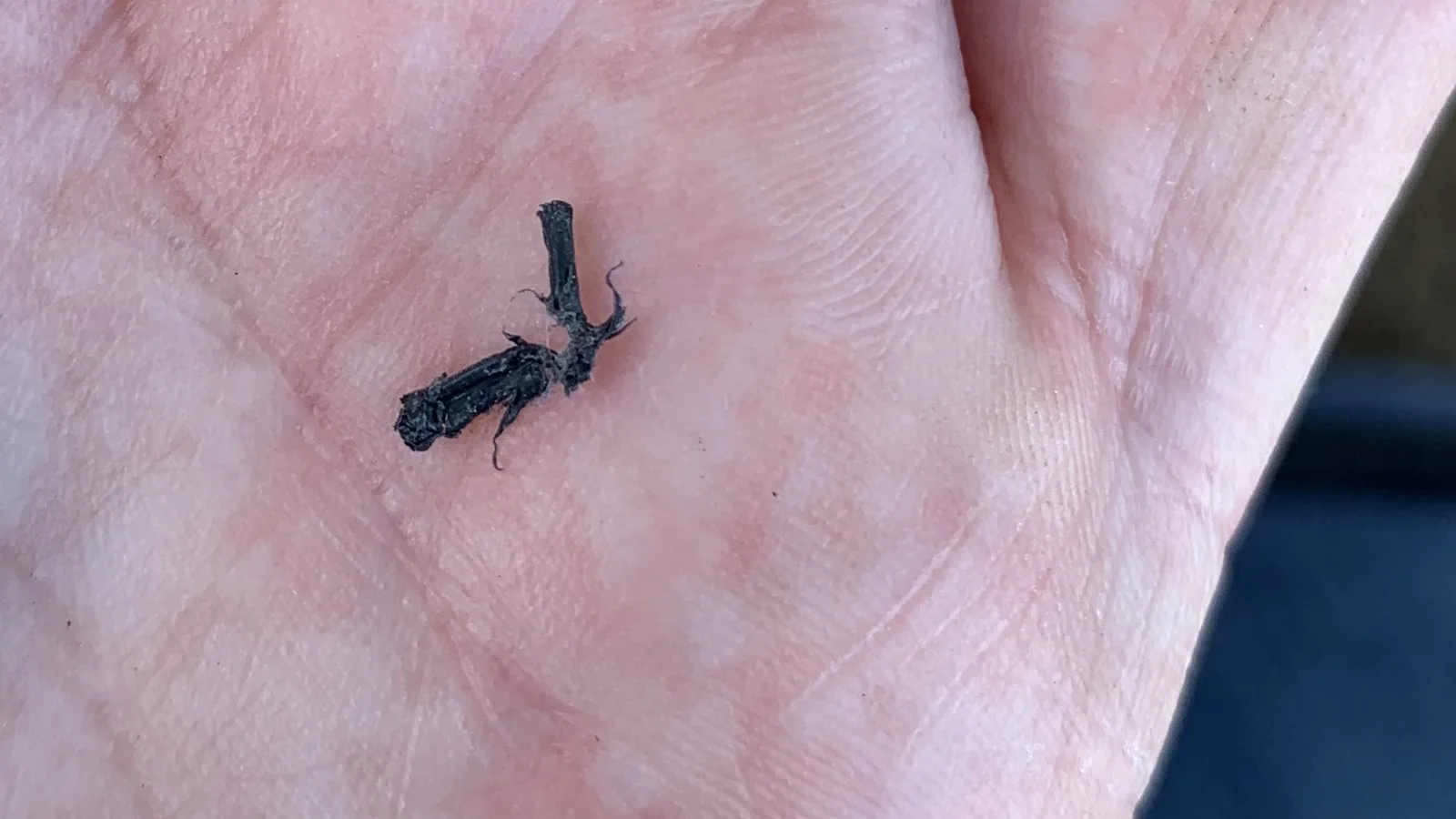
Programmers hate bugs in the software. We hate bugs in the hardware.
This beetle found its way into a tower installation and created a short that took down the entire link. What you’re looking at is what remained. We identified it as a beetle primarily by process of elimination.
The fix took under an hour. The explanation to the customers—that their internet had been taken down by an insect—took a little longer.
Wrong Location, Right Intention
Out of Sight, Off the Network
Many “slow Wi-Fi” calls come down to one thing: the router is tucked away in a cabinet, drawer, or decorative box.
Wi-Fi is radio. It can pass through walls and furniture—but every barrier weakens it. Enclosing a router in a cabinet forces the signal through extra material (and often metal or wiring), reducing coverage and speed.
The fix is simple: place it in an open, elevated, central location. Not hidden in furniture.
The harder part is explaining why the tidy cabinet is causing the dead zone in the guest room.
Wildlife Encounter
Unexpected Guest
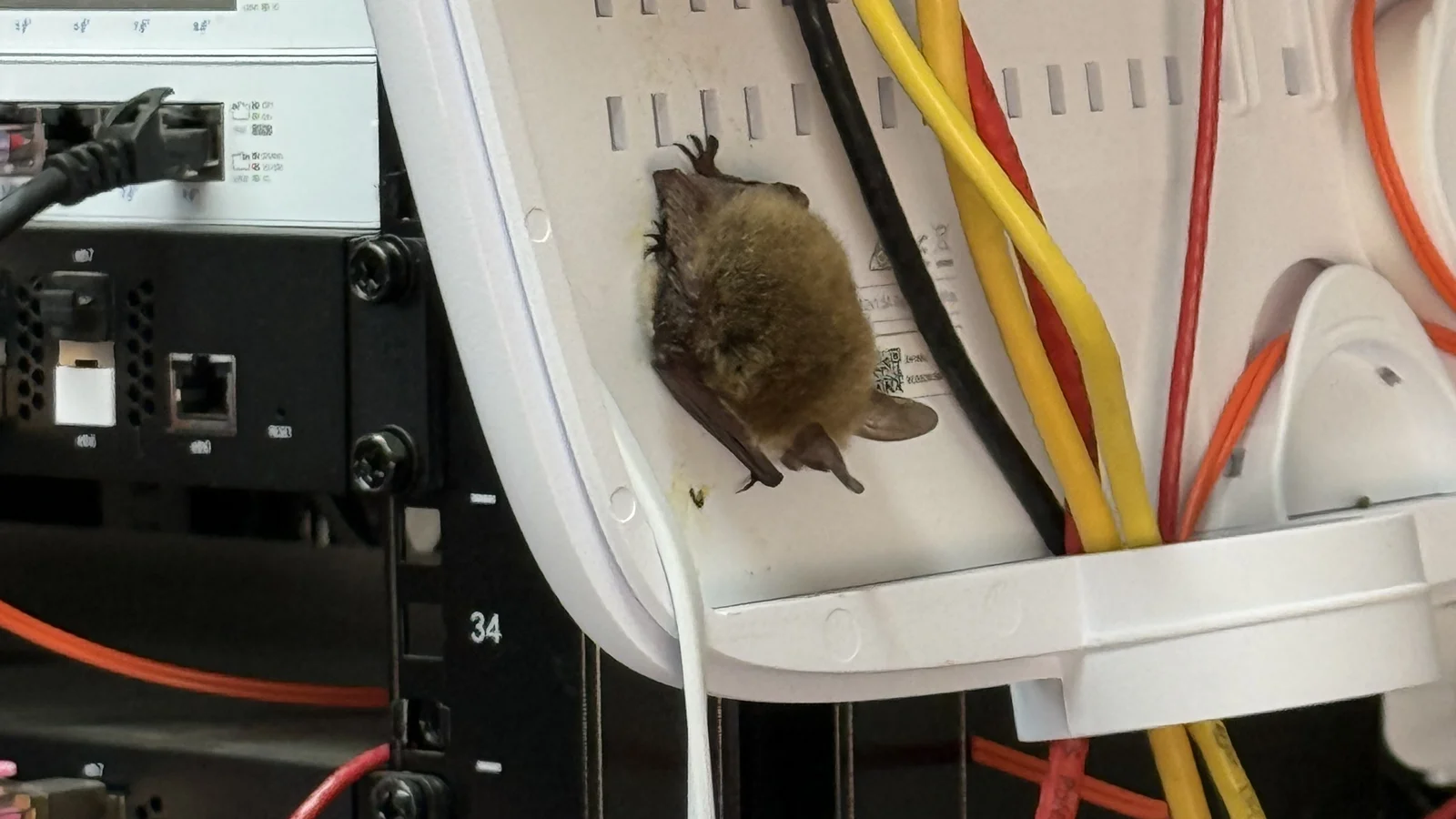
One of our network switches—sitting unsealed in our home office mock-up rack, not yet destined for the field—turned out to have a tenant. A live bat had found its way inside the equipment bay at some point during the night. It appeared healthy and thoroughly unbothered by our discovery.
The bat has since been safely relocated. The switch survived.
Wildlife Encounter
Spotted on the Network
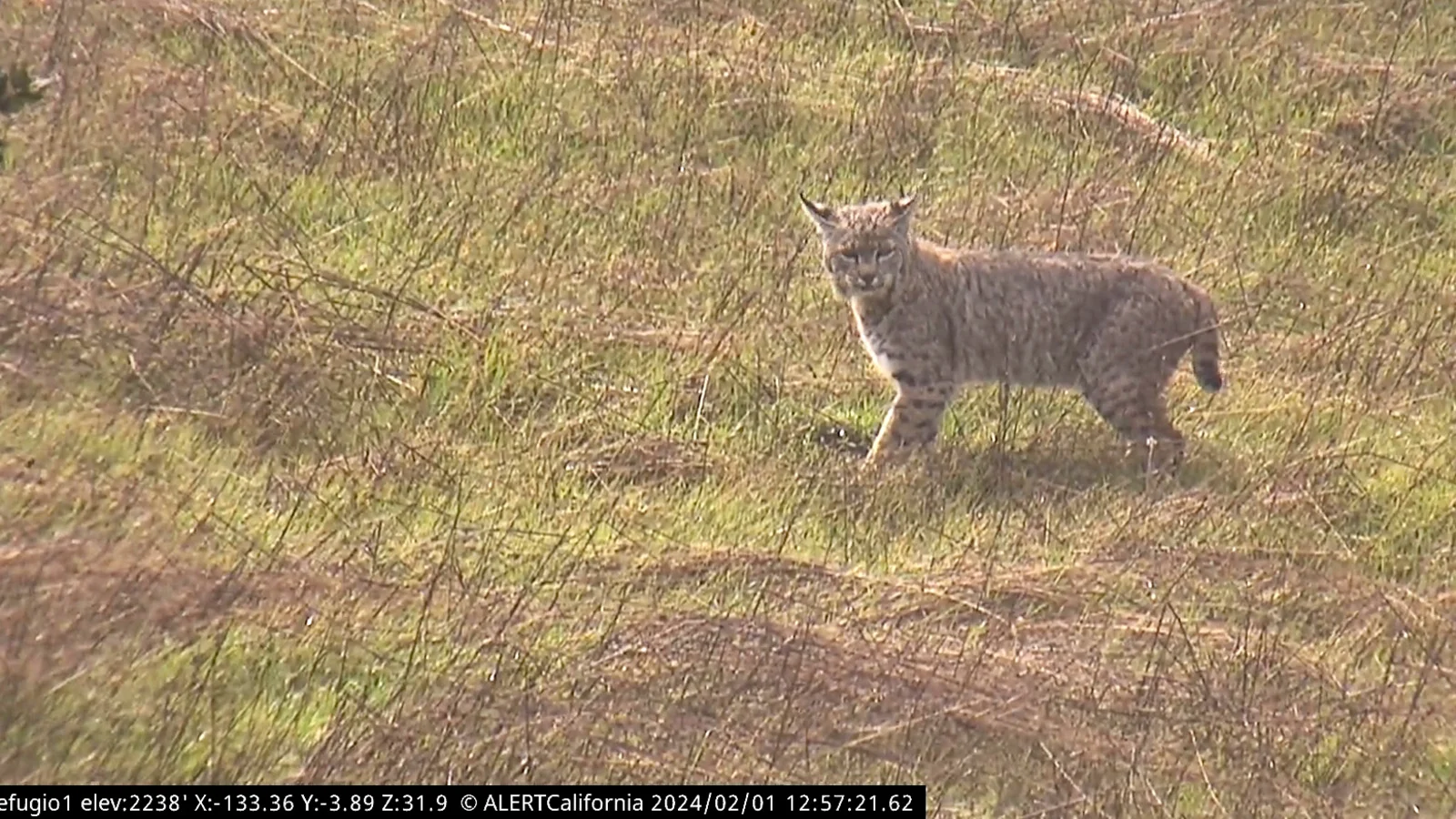
ALERTCalifornia operates a network of fire and weather cameras across California. KIZA provides internet connectivity to some of them. This bobcat was captured by one of those cameras at a ridge site above the Santa Ynez Valley in February 2024. The camera was doing its job. So was the bobcat.
(Image coutesy of ALERTCalifornia | UC San Diego)
Field Awareness
Do Look Down (And Into Corners)
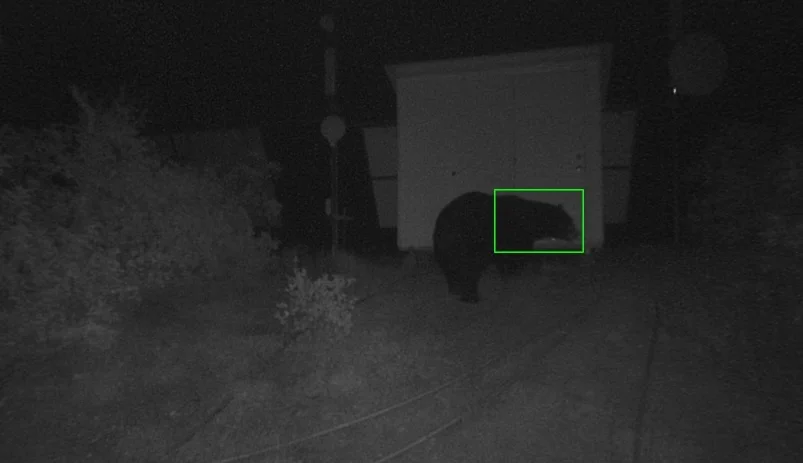
This bear was caught on the camera at one of our hilltop relay sites. It appeared to find the equipment enclosure interesting. We were not there at the time. The equipment was fine.
The valley has other hazards that don’t appear on any spec sheet. We’ve found rattlesnakes coiled under equipment boxes and black widows or yellow jackets in nearly every outdoor enclosure we’ve opened, enough that checking before reaching in is just standard practice now.
Please note: do not throw rocks at snakes! If you’re expecting a site visit and know there’s rattlesnake activity nearby, a heads-up is appreciated. We’ll still come. We’ll just watch our step and bring our snake boots.
Local Color
The Welcoming Committee
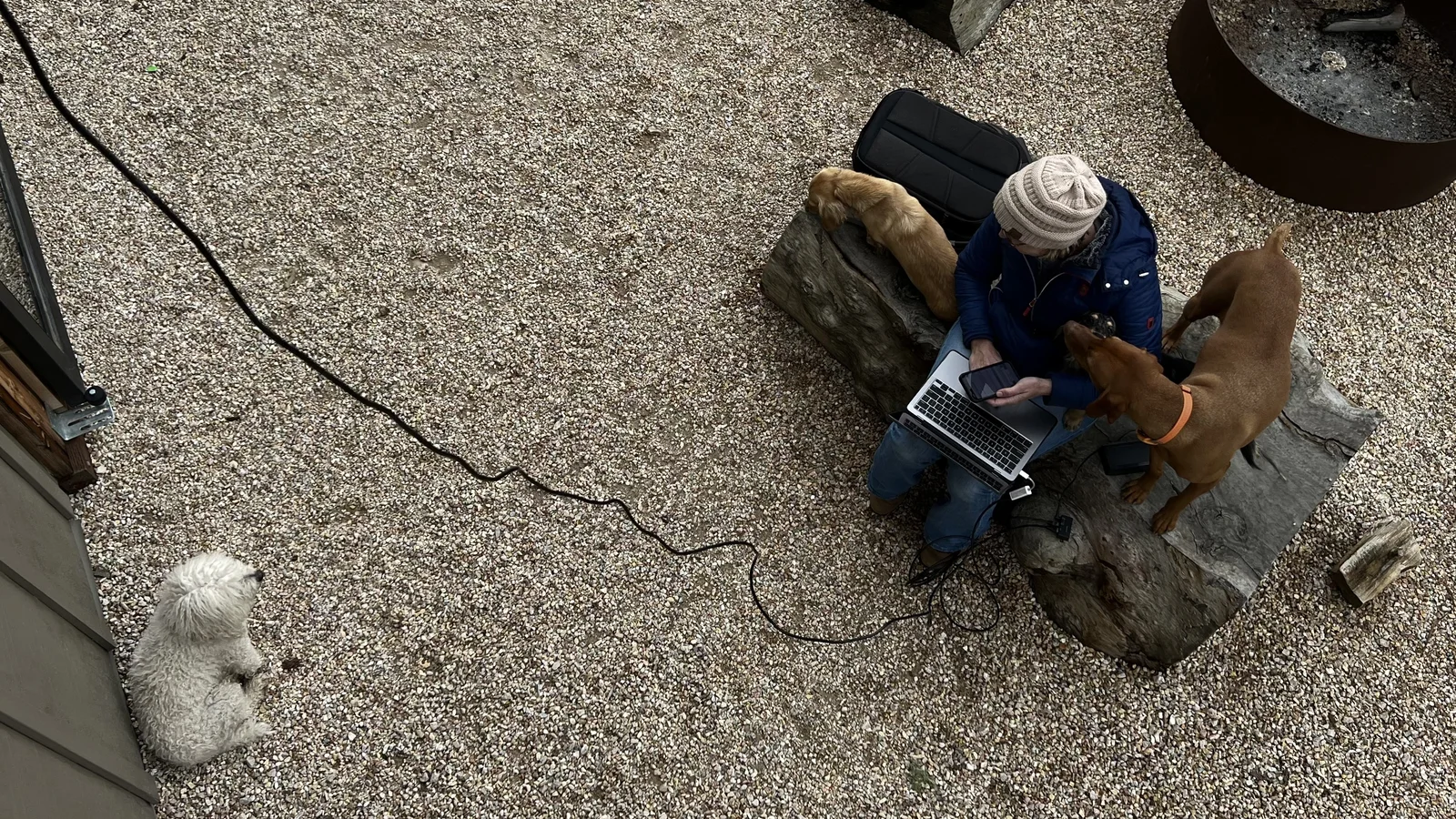
Not every site greeter is a dog, though most are. We’ve been met at gates and along driveways by horses, deer, mice nesting inside equipment enclosures, and at least one dog who jumped into the truck before we could stop him. The valley also has a camel and at least one zebra, both of which have appeared on service calls.
Force Majeure
The Lake Fire, Summer 2024
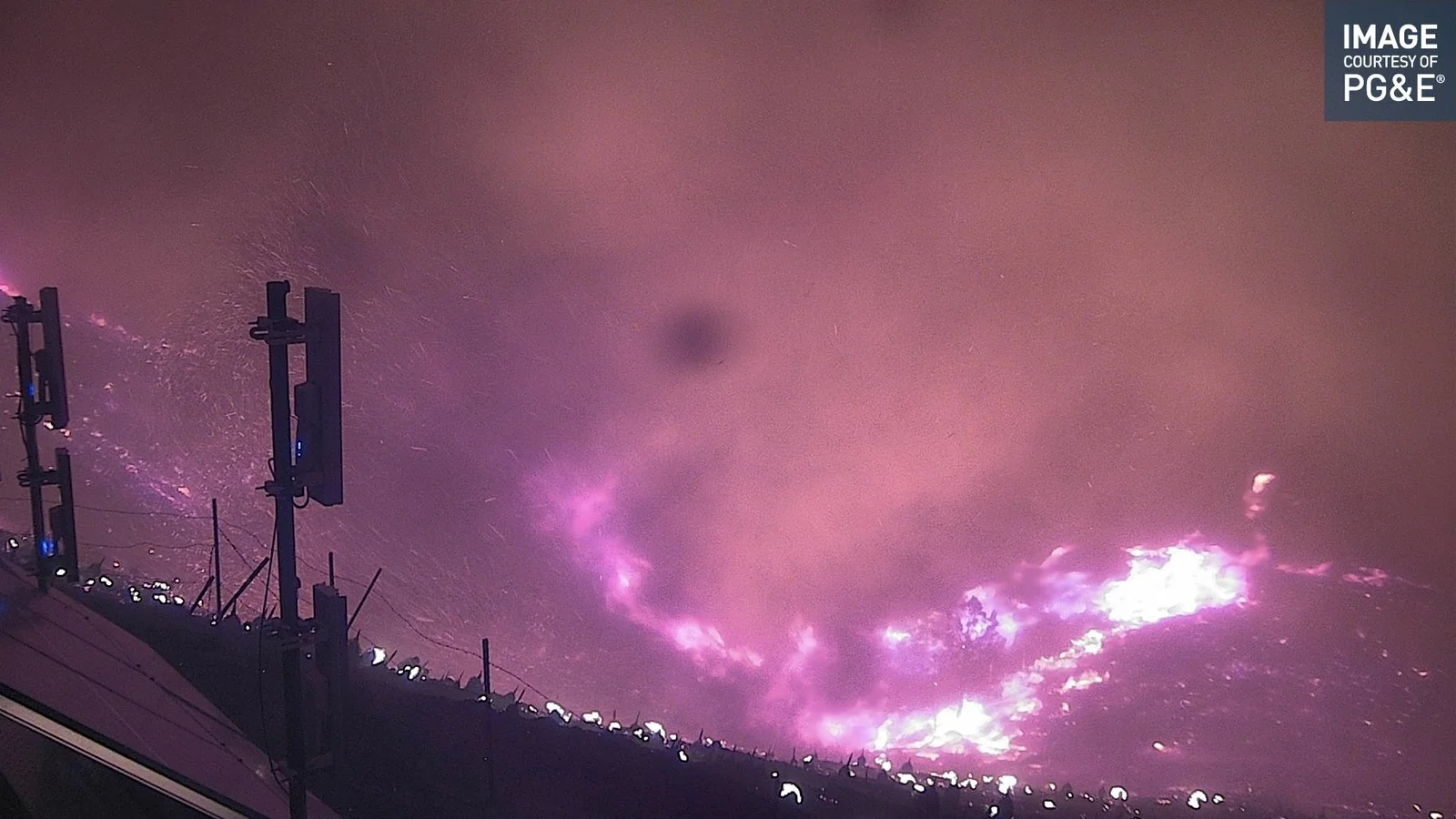
In the summer of 2024, the Lake Fire burned through parts of the Santa Ynez Valley. Two of our relay sites were in its path. This image was captured by an ALERTCalifornia camera at one of those locations as the fire burned through.
This one isn’t particularly funny, but it belongs here: elevation and remoteness aren’t just engineering challenges. Equipment that matters needs a recovery plan before it’s needed, not after. Both sites were fully operational again the same day the fire teams allowed access.
(Image courtesy of ALERTCalifornia | UC San Diego | PG&E)
Dedication
We’ll Go Anywhere
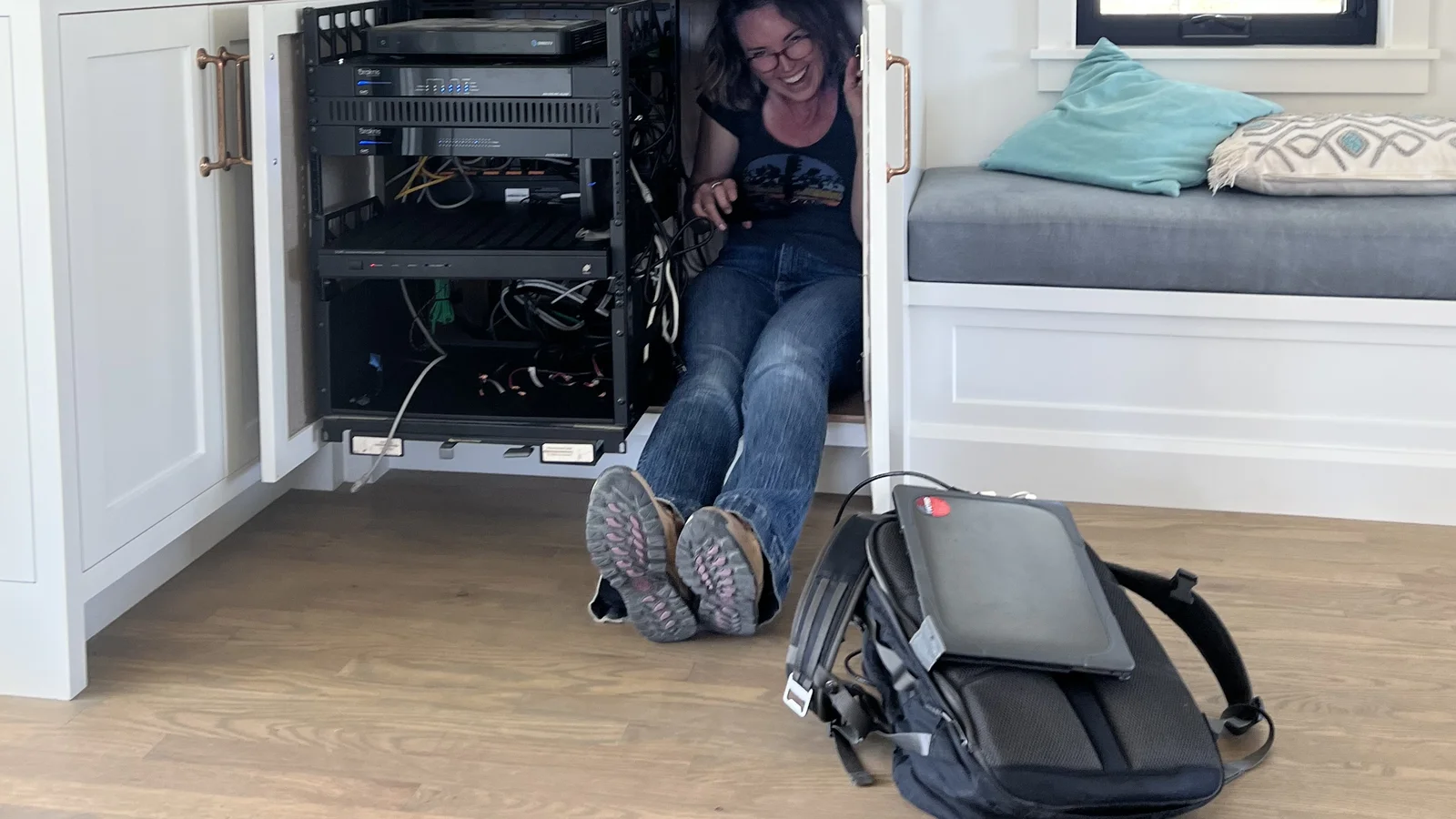
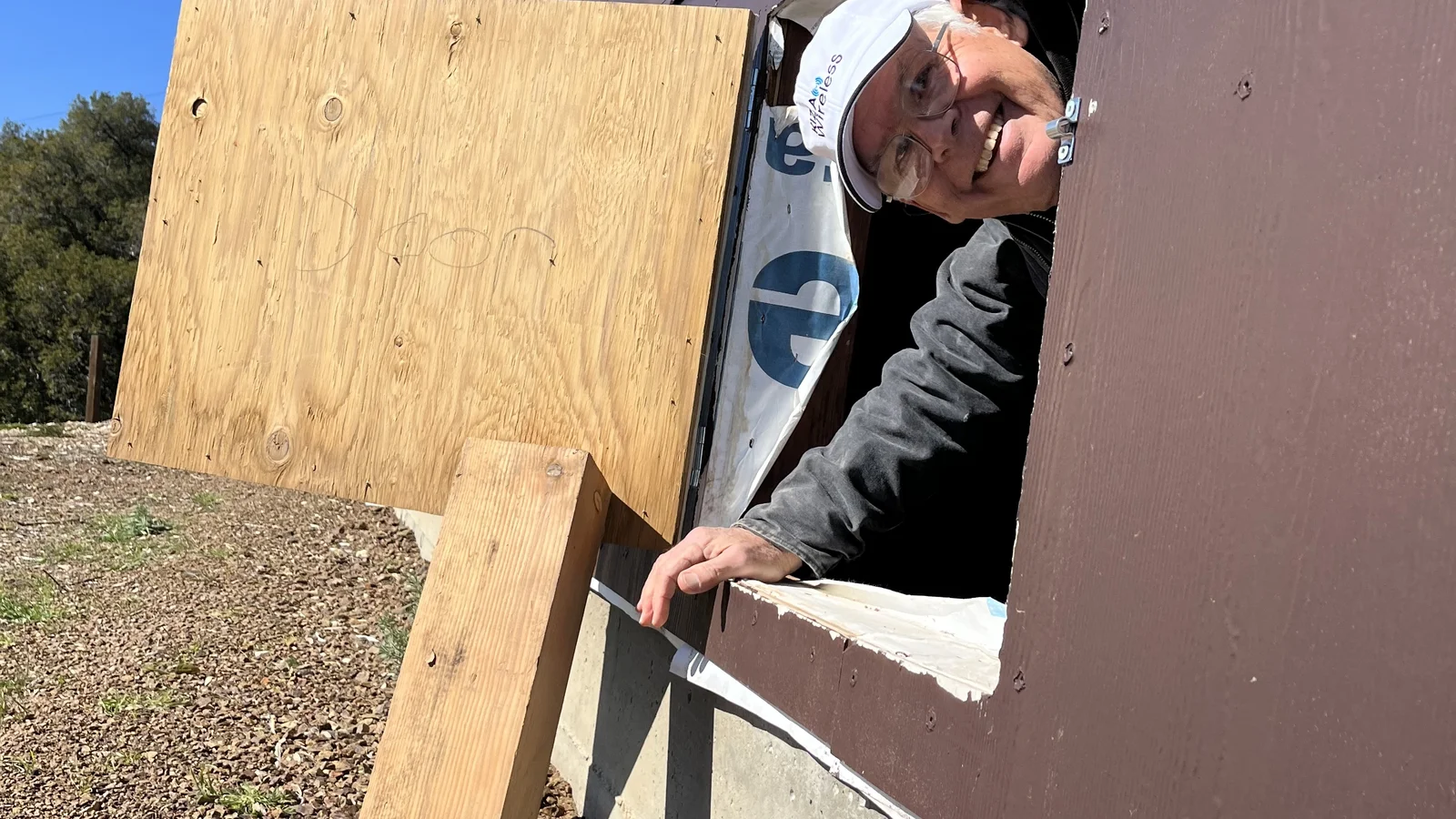
Some access situations require more commitment than others. Left: a network rack built into a bookshelf: clean install, great concept, very compact. Right: accessing network equipment via the crawlspace of a house. In both cases, the job got done. In both cases, someone found the humor in it.
Local Color
Noted
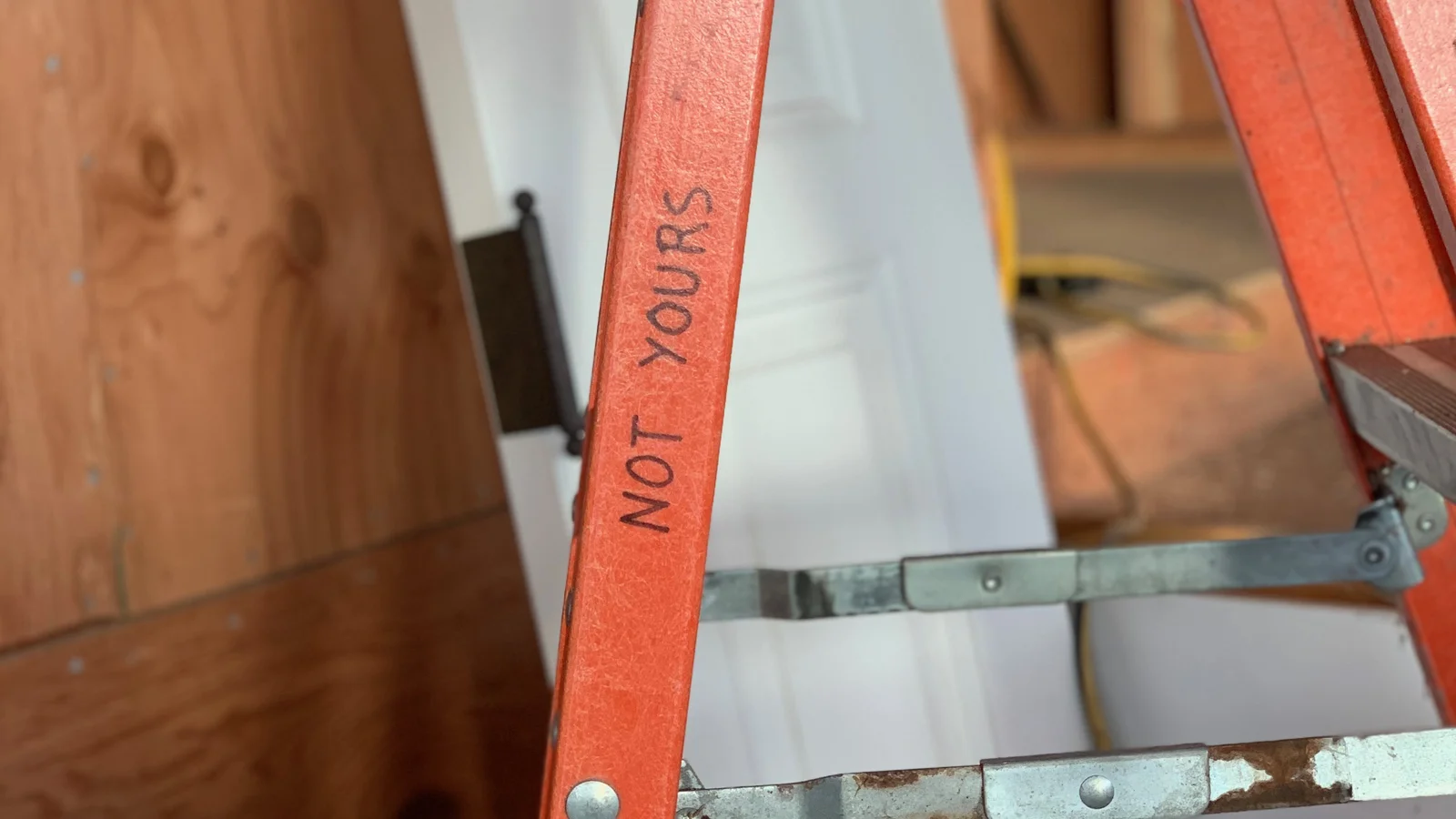
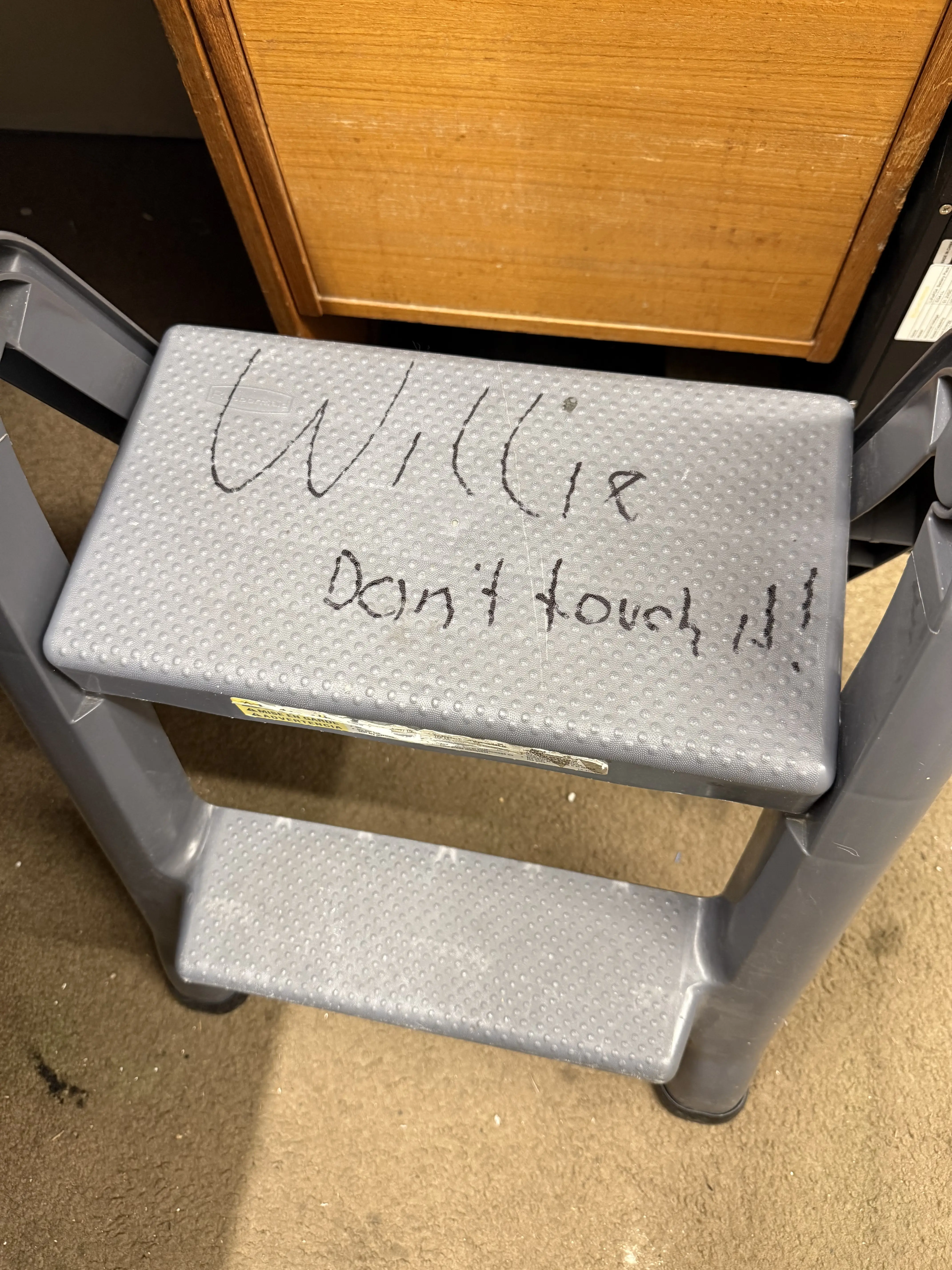
Found at job sites. We used our own ladder. Willie’s stool was safe with us.
Local Color
Not Every Call Is a Network Problem
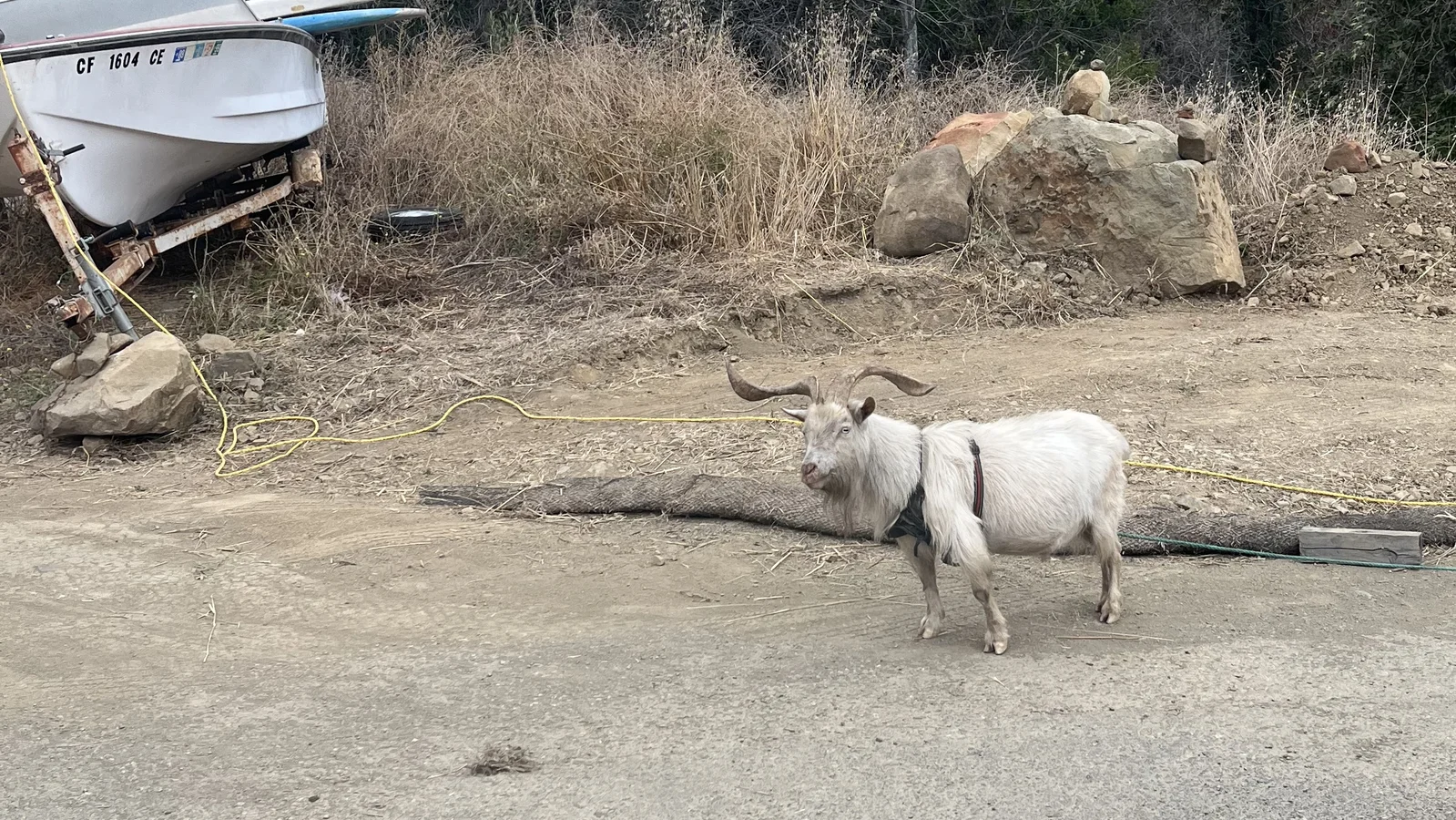
Refugio Road. A Tuesday afternoon. We did not stop to investigate.
Your Network Doesn’t Have to End Up Here
If you inherited a questionable install, are seeing intermittent issues you can’t explain, or just want a second set of eyes before something fails, we’re happy to take a look.
Get in Touch IT Services